
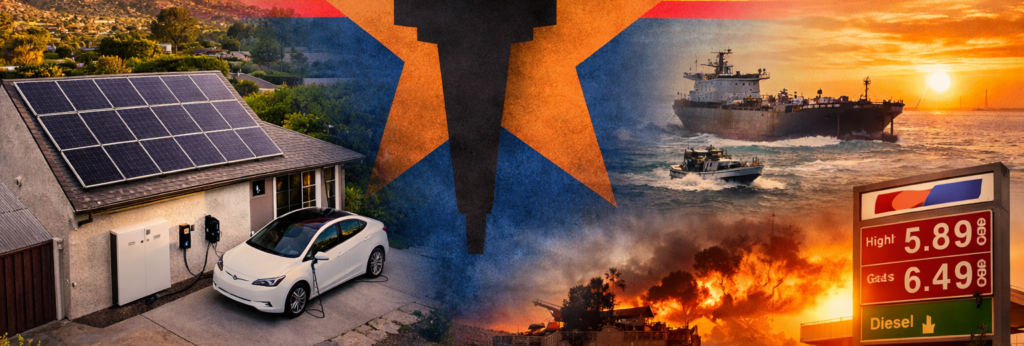
If you can vote in this election, request a ballot.
The deadline is March 27. Election Day is April 7. Eligible landowners can vote by mail or in person. Most people who can vote in this race still do not know it exists. That alone tells you how unusual this election is, and how much room there is for a small number of informed voters to matter.
Why I care about this at all
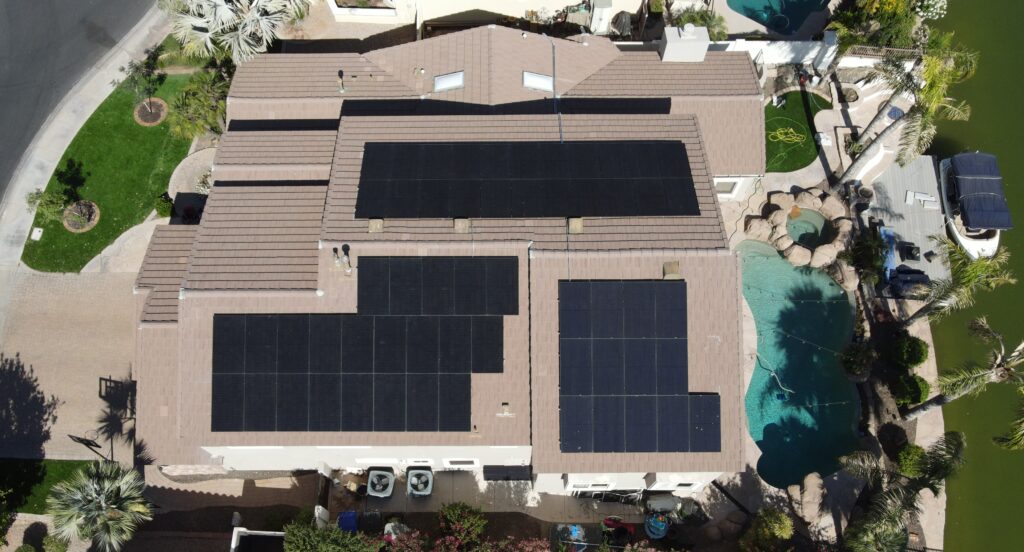
For me, solar and electric cars were never mainly about image. They were about independence. Over my adult life I have driven hybrids and EVs, built my own battery systems, installed multiple solar systems, and spent more time than I probably should studying SRP rate structures. My current setup is 23kW of solar and 26kWh of battery storage. I built it because I do not want my family’s transportation and home energy tied to foreign wars, oil spikes, imported crude, or whatever rate design a monopoly utility decides to try next.
The problem with centralized systems
In Arizona, much like other states, you do not shop for power. You get whoever owns your territory, and then you live under that pricing structure. You know, a lot like the cartels of Mexico. That is not a market. It is a monopoly by map. Systems like that do what centralized systems usually do. They get more political over time. More complicated. Harder for normal households to push back on.
What small government should mean
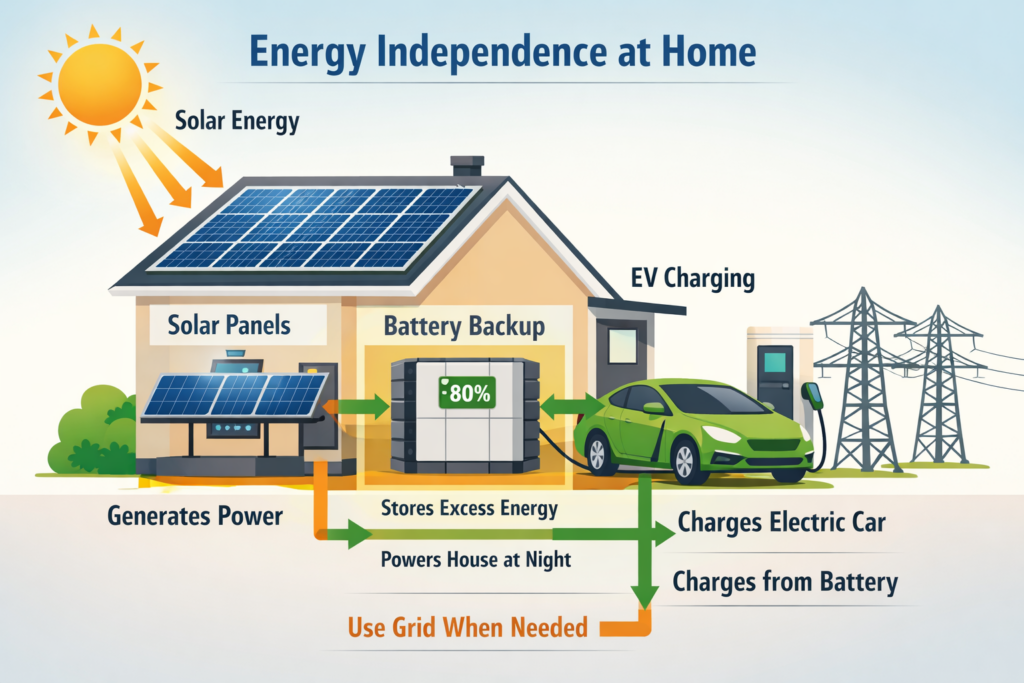
To my conservative friends, small government is not supposed to mean blind loyalty to every large inherited system just because it already exists. If a house can make some of its own electricity, store it, and choose when to lean on the grid, that house has more leverage. The grid still matters. It just stops being the only option.
Why oil belongs in this argument
Most petroleum in the United States is still burned in transportation, not electricity generation. EIA says transportation accounts for about 66.6% of U.S. petroleum consumption, and petroleum products made up about 89% of U.S. transportation energy use in 2023. Petroleum accounts for almost none of the electric power sector’s primary energy consumption. That is why EVs matter. Moving a household from gasoline to electricity is one of the few practical ways to step out of the oil market. If that electricity can come from your roof and your batteries, you step even farther out of it.
Why foreign wars still hit your wallet
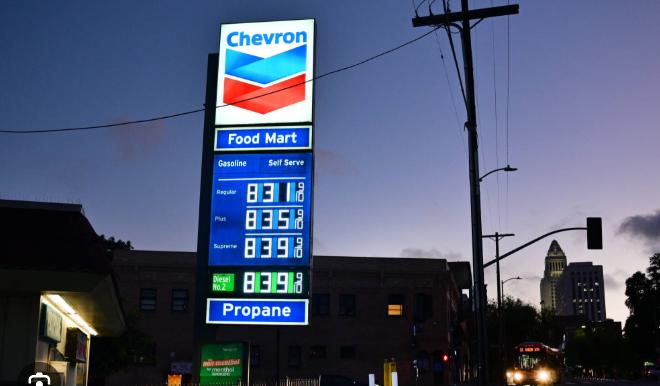
The Strait of Hormuz still moves about 20 million barrels per day, roughly one-fifth of global petroleum liquids consumption. When that chokepoint looks unstable, oil reacts. Then gasoline reacts. Then freight, inflation, and household budgets react. That is what centralized fuel systems do. Trouble half a world away shows up at your gas pump in Arizona. Solar, batteries, and EVs do not make you immune to the world. They do give you some insulation from it.

Why this is finally practical
Ten or fifteen years ago, this argument had a hole in it. Solar was expensive. Batteries were expensive. EVs were niche. That is not where we are now. NREL says residential solar costs have fallen 65% since 2010. DOE says EV battery pack costs are 90% lower than they were in 2008. We are not waiting on some miracle technology anymore. The parts are here. The fight now is over whether policy makes it easier for households to use them, or harder.
Why the SRP election matters
SRP’s electric side runs through the District, which is an agricultural improvement district and political subdivision of Arizona. The water side runs through the separate Association, a private water corporation. The District board sets electricity rates and energy policy, and SRP is not regulated by the Arizona Corporation Commission the way APS is. It is a live fight over rates, rooftop solar, home batteries, EV charging, and the direction of the grid itself.
The part every solar owner needs to understand
The real deadline for rooftop solar inside SRP territory is November 2029. SRP says the E-15 and E-27 plans will be eliminated in the November 2029 billing cycle, and those are the plans SRP still identifies as net-metering plans. After that, the old net-metering structure is effectively gone. This is not just about your next bill. It is about whether rooftop solar still makes economic sense for an ordinary household a few years from now.
How SRP is changing the game
SRP’s export-based plans pay 3.45 cents per kWh for exported solar. At the same time, SRP has moved 8 a.m. to 3 p.m. into the cheap part of the day and left the evening as the expensive part. Those are the exact hours rooftop solar produces best versus the hours families are more likely to need power back. Homeowners sell daytime solar cheap and buy power back later at higher rates. That is a rate structure built around the utility’s solar, not yours.
Why this matters beyond solar owners
If you make rooftop solar weaker, you also make home batteries weaker. If you make home batteries weaker, you make it harder for families to charge EVs off their own generation and cut gasoline dependence. That is the larger point. This is not just a fight over solar compensation. It is a fight over whether families get a real path toward energy independence, or whether they stay tied to the same centralized system with a different label on it.
Why non-solar households should care too
SRP says data centers made up 5.1% of its summer 2025 peak and are its fastest-growing customer segment. Somebody is going to shape the next round of planning, infrastructure, and rate design. If the board gets that wrong, households end up carrying more of the load while the system gets built around large, constant users.
The direction of the race
There are two clear slates in this election. The Clean Energy Team is running on affordability, renewable energy, water protection, and making data centers pay their fair share. The other side is the establishment/pro business slate. Turning Point Action is backing it. So is Arizonans for Responsible Growth, a business-backed group that says it represents business and community leaders and growth-oriented industries. Turning Point Action identifies itself as a 501(c)(4), and the IRS says organizations like that generally do not have to disclose contributor names in the public version of their annual returns. So we really have no idea which billionaires are bankrolling this effort. Axios reported that ARG expected to spend more than $500,000 on this race and that the Clean Energy Team expected to be outspent about 10-to-1. You do not need to invent motives to notice the pattern. Organized money shows up when organized interests think something important is on the table.
My votes
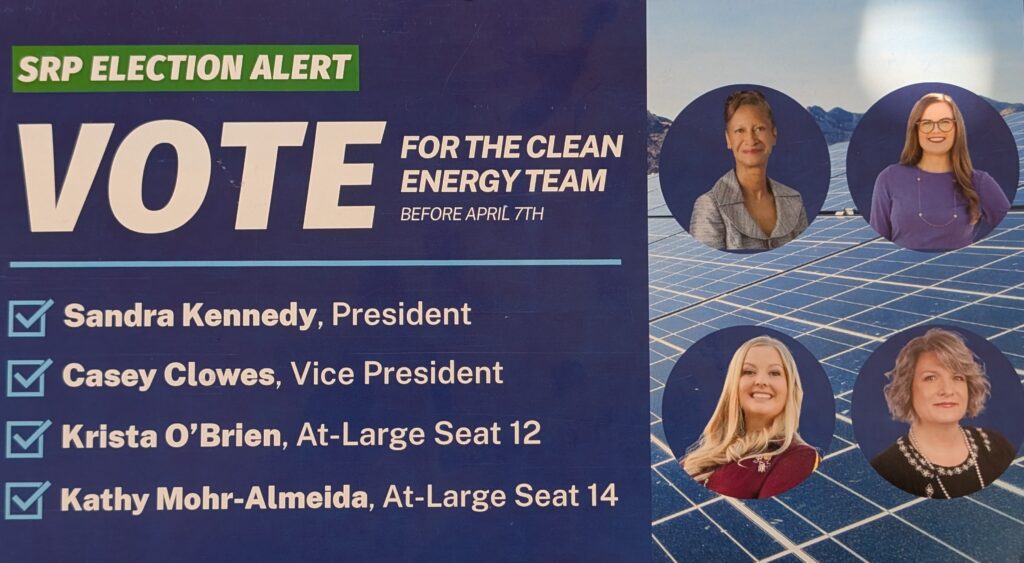
In the district-wide races, I am voting for Sandra Kennedy for president, Casey Clowes for vice president, Krista O’Brien for at-large seat 12, and Kathy Mohr-Almeida for at-large seat 14. That is the Clean Energy Team slate. Their case is straightforward: affordable electricity for Arizona families, distributed energy, water protection, and making data centers pay their fair share. Between the two directions in this race, that is the slate closer to household leverage instead of deeper dependence on the existing structure.
The future is not hard to picture
Solar on the roof. Batteries in the garage. An EV in the driveway. A grid that still exists, but is no longer the only option. Less dependence on imported oil. Less exposure to foreign shocks. Less leverage in the hands of institutions too large and too distant to care about your household until election time. That is the more libertarian energy future. It is also the more practical one.
Bottom line
If you can vote in this election, vote. If you know somebody who owns eligible land in SRP territory and probably has no idea this race exists, send this to them. The April 7 SRP election is not a side show. It is a vote over whether Arizona moves closer to decentralized energy or farther away from it.